

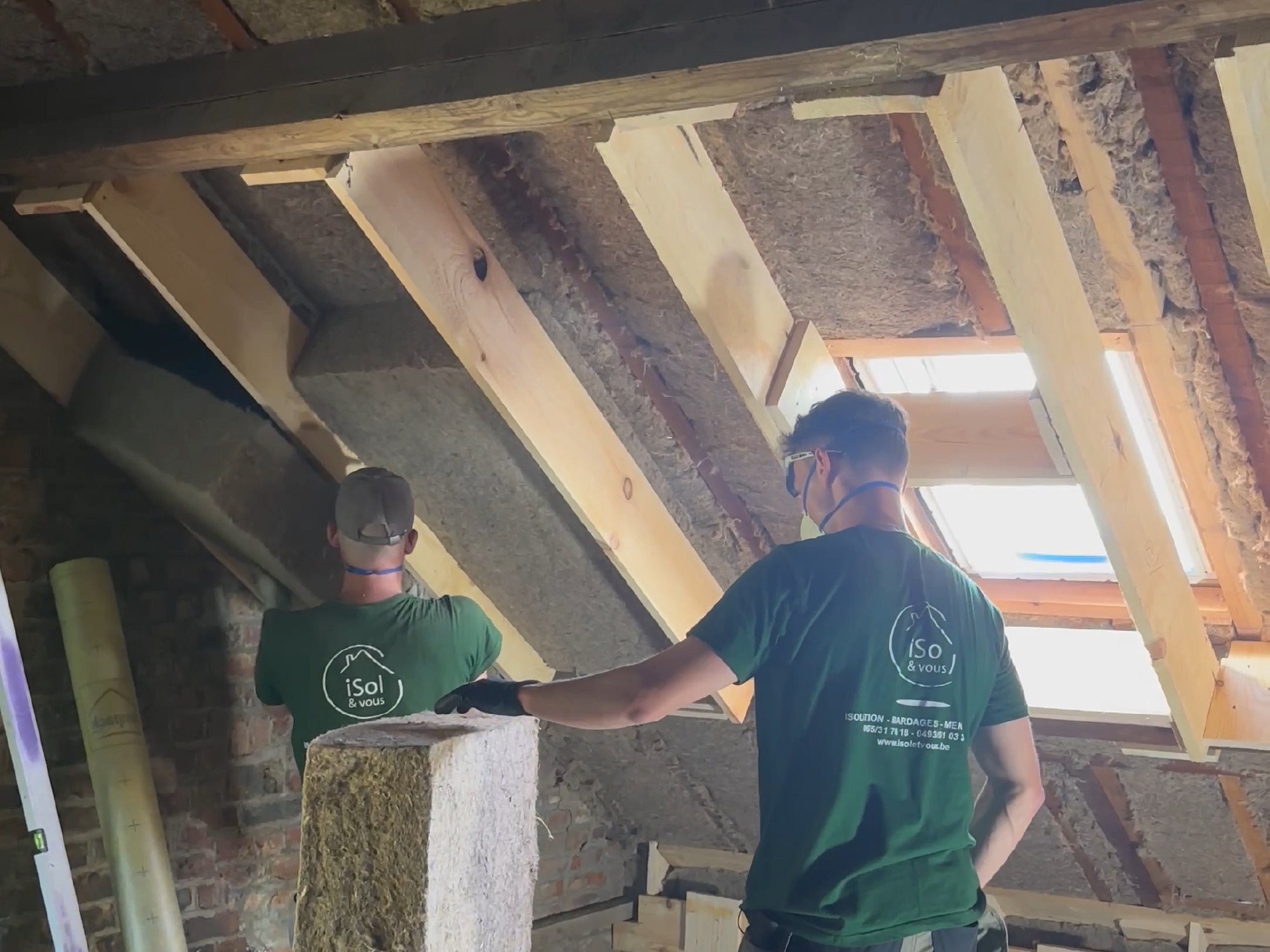
Bio-based insulation for attics and roofs
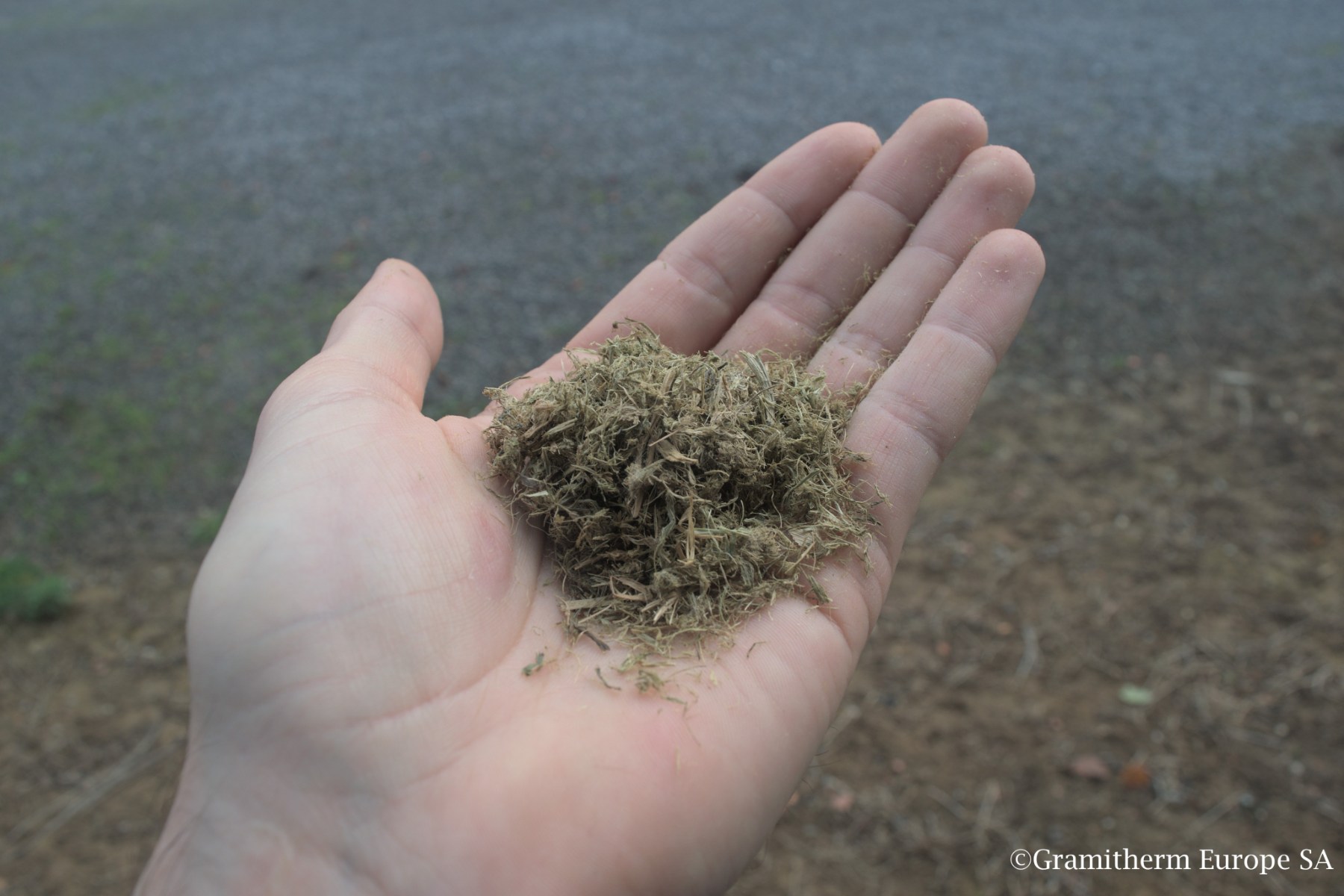
Choose grass fibre for insulating your pitched roofs.
The roof is one of the most critical points for thermal loss. Efficient insulation significantly improves thermal comfort and reduces energy consumption. Whether in new construction or renovation, certain conditions must be met to ensure the insulation's performance and durability.
Pre-installation conditions for roof insulation
Before installing roof insulation, it's essential to check the following:
Flawless roofing
There must be no water infiltration.
Suitable under-roof membrane
The membrane must be vapour-permeable (HPV, sd value < 0.1 m) and installed to be completely watertight and windproof.
Effective ventilation
The space between the under-roof membrane and the roof covering must be properly ventilated.
Sound and stable framework
It must be clean, free of fungal growth, and able to support the insulation's weight.
Installing roof insulation
In new construction
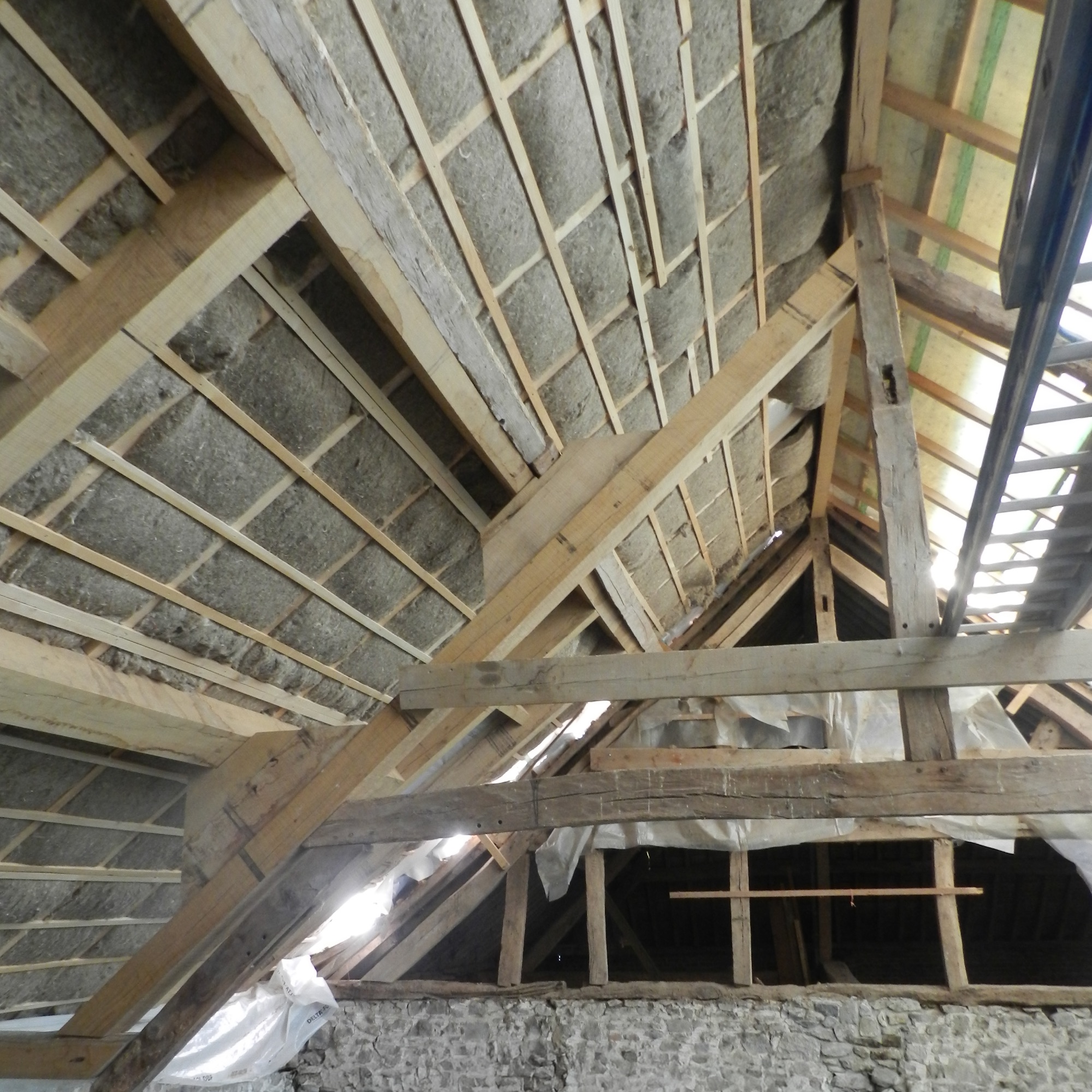
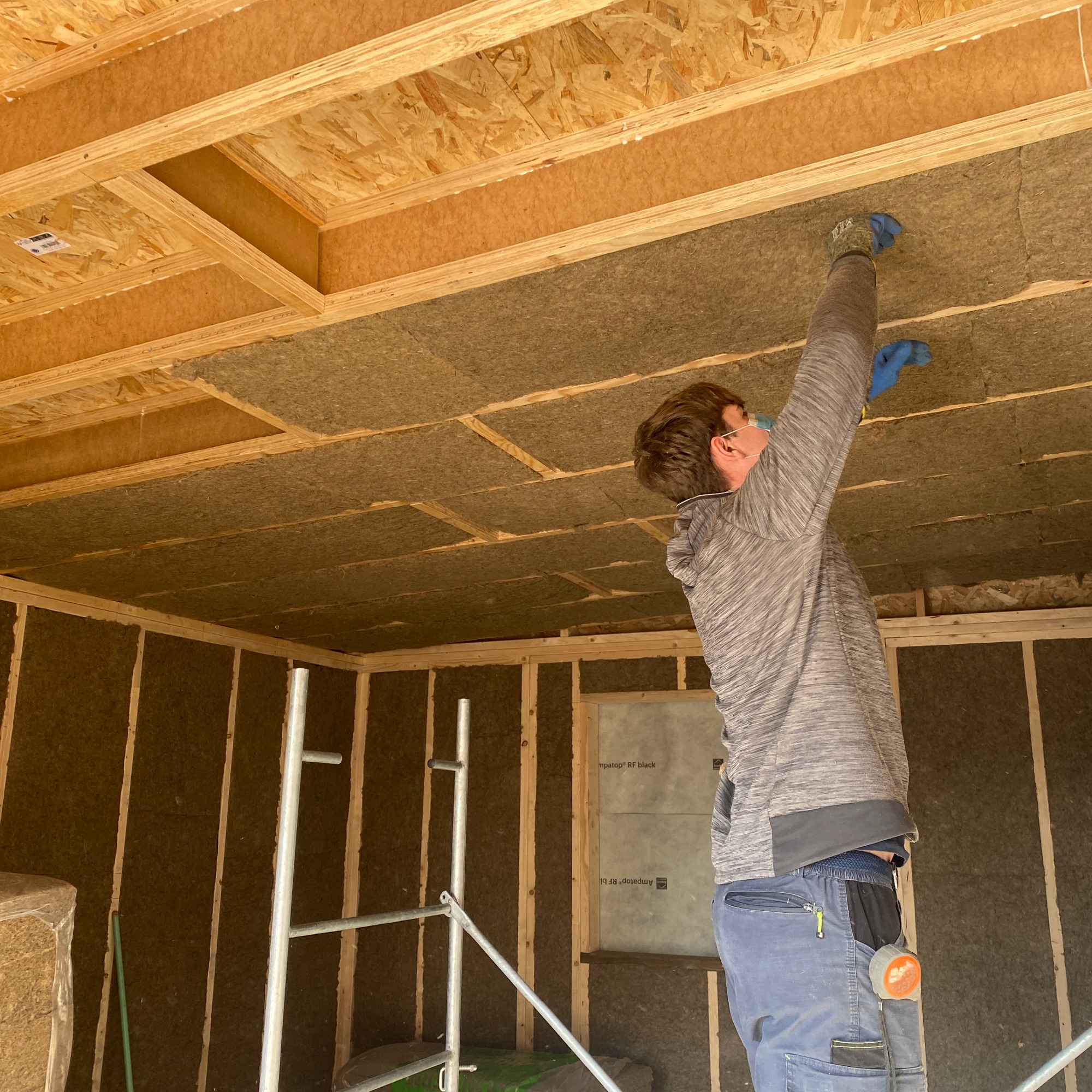
New frames are generally designed to accommodate optimal insulation thickness. A continuous layer of Gramitherm® panels is placed between the under-roof membrane and the airtightness membrane, slightly compressed (2 to 4 cm) between the studs.
In renovation
Existing structures are often shallower, requiring adapted installation:
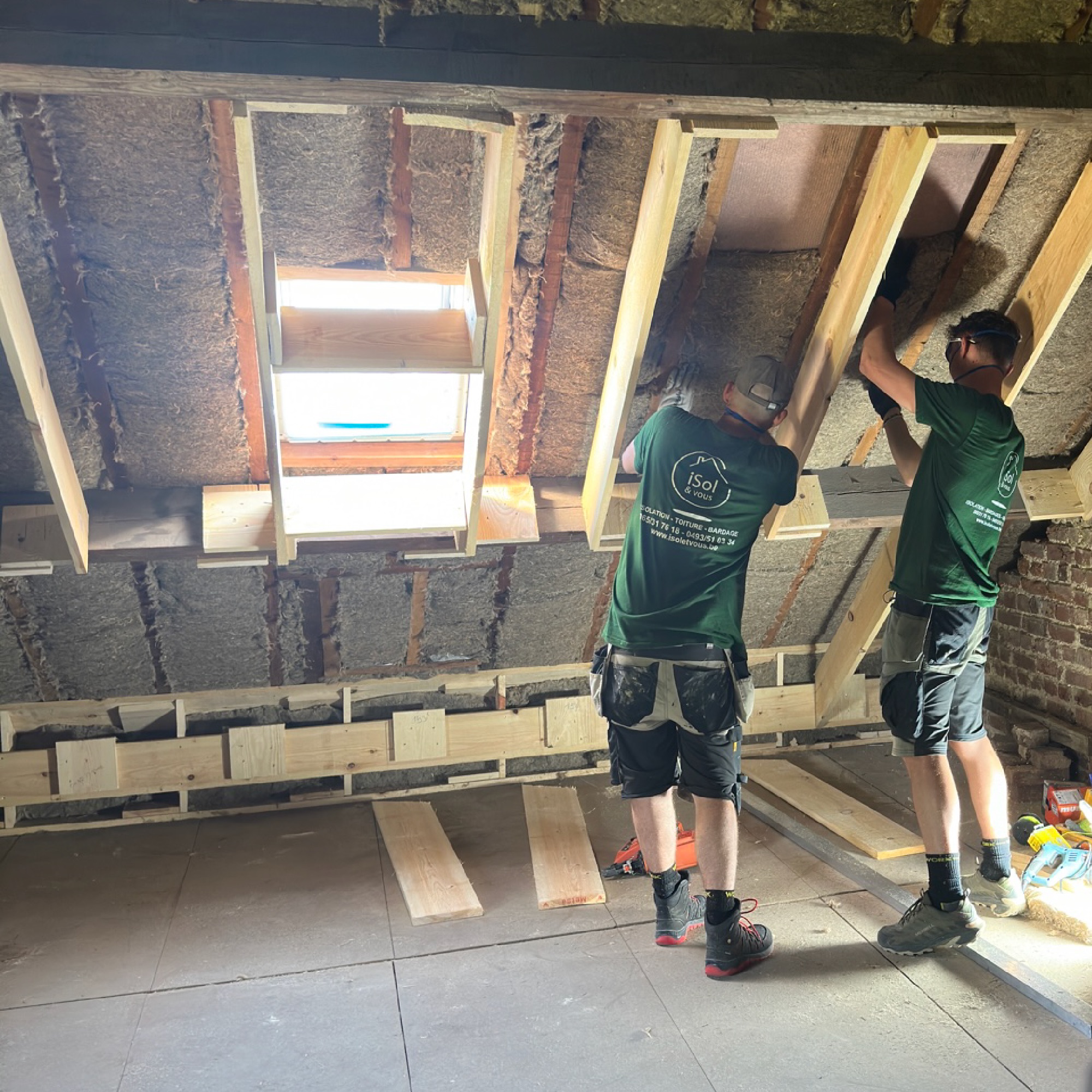
- Cross-layer installation: One layer between rafters, a second layer on a secondary framework.
- Complementary systems: The second layer can be installed using Sixbox suspensions or a suitable wooden frame.
Airtightness: a key factor
Once the insulation is in place, ensuring airtightness is essential to optimise thermal performance. Airtight membranes serve several functions:
- Vapour regulation: Control moisture flow through the wall.
- Heat loss prevention: Limit unwanted air infiltration.
- Insulation durability: A correct installation ensures long-term performance.
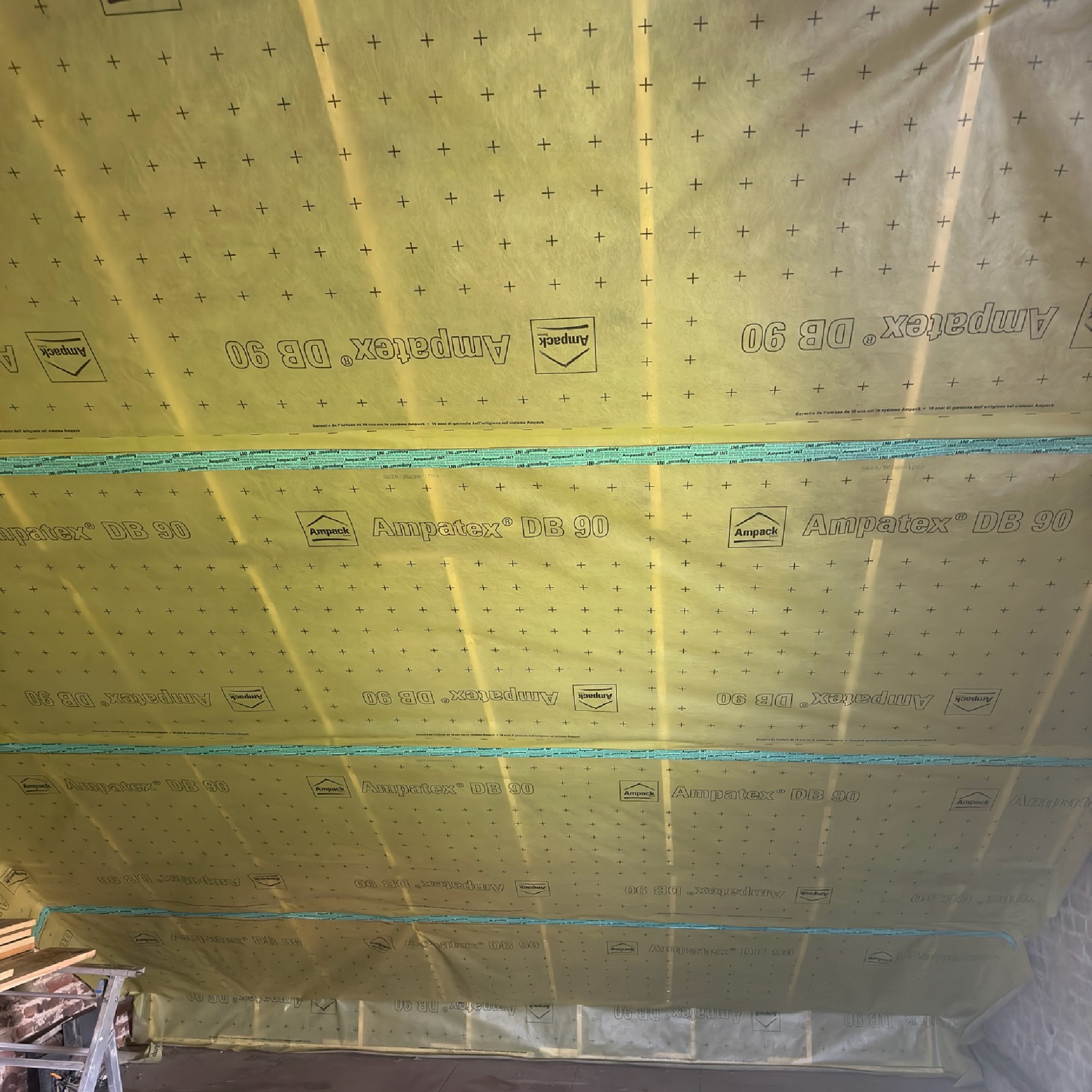
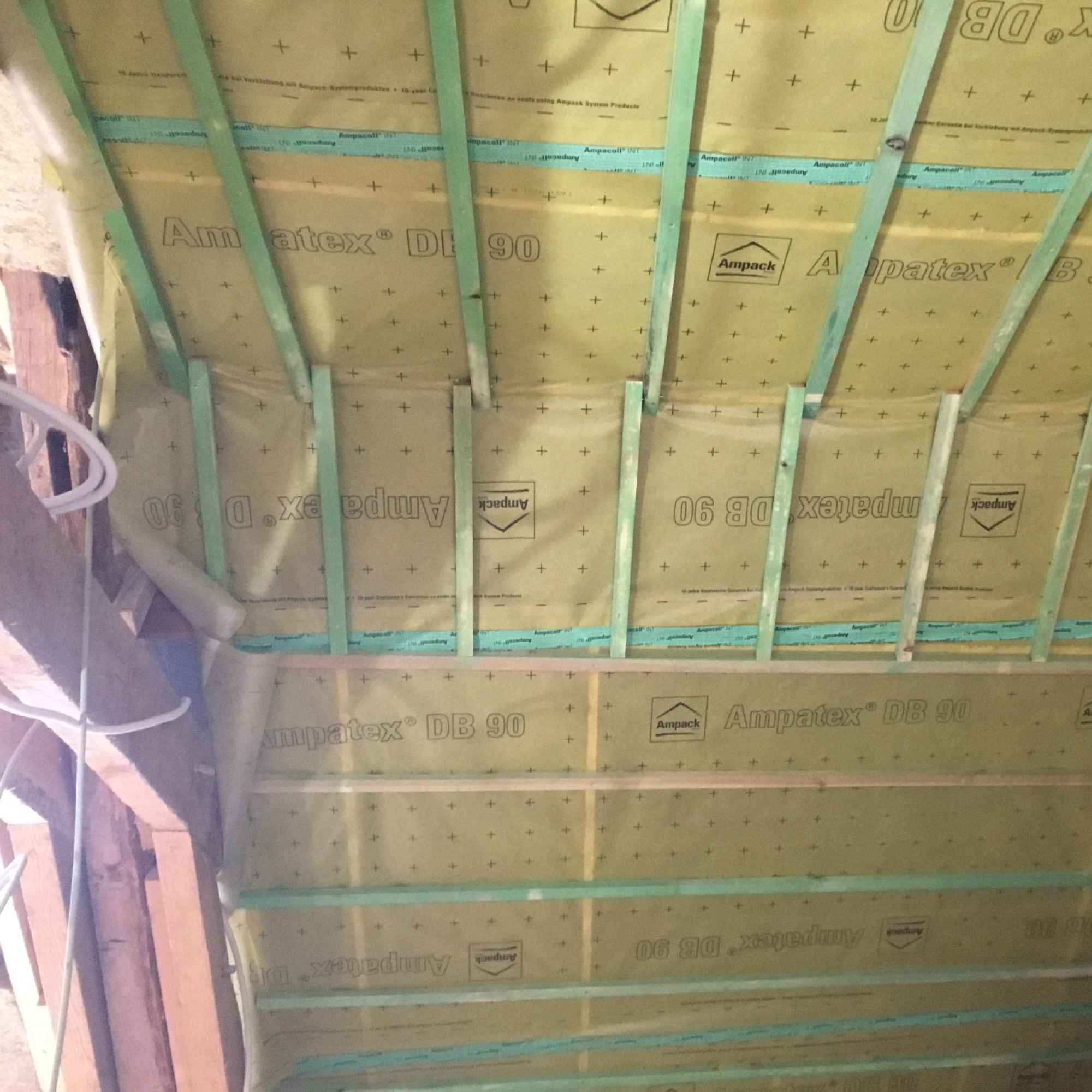
We recommend using Ampatex DB90, provided all prior installation conditions are met.
Airtight membrane installation best practices
- Install independently, continuously, and airtight across the insulated surface.
- All joints, gaps, and connections to building elements or between sheets must be perfectly sealed to prevent air leakage.
- Singular points must be treated with airtight precision and according to best practices.
- Immediate repair in case of puncture or damage.
Finishes and technical openings
Once airtightness is ensured, finishes must be carefully applied to preserve the work done.
- Technical openings: Leave a gap between the airtightness layer and finish for electrical conduits or other utilities.
- Chimneys: Maintain a 20 cm fire-safe distance around chimney crossings, insulated with non-combustible materials. Never connect the airtightness membrane directly to the chimney (comply with regulations and stove manufacturer recommendations).
Flat or low-pitched roof insulation
Flat roofs require a fully waterproof outer layer. This implies a vapour-tight wall system, which is generally unsuitable for bio-based insulation. However, if sun exposure is ideal and the roof is not greened (no terrace or gravel), Gramitherm® can be used between joists of a flat roof. Strict compliance with design office specifications is required. Flat roof insulation with bio-based materials is sometimes possible, but it must be planned carefully, contact us for support!
The same applies to low-pitched roofs. Ampack offers weldable and vapour-permeable membranes suitable for roof pitches up to 5° or even 3°. Contact us for guidance.
Insulation in line with regulations
Our product applications follow best practices and comply with national standards and regulations.