

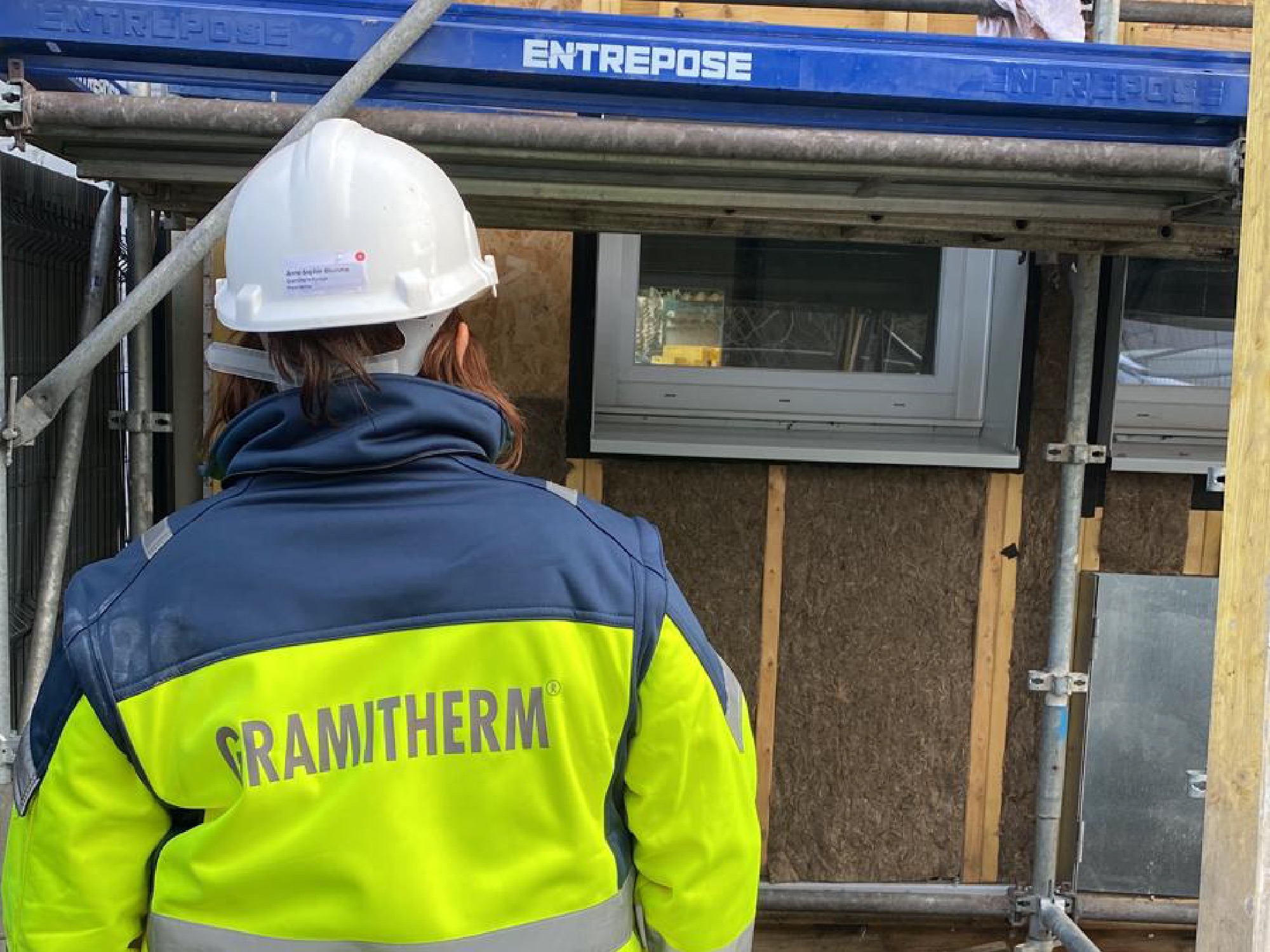
Bio-Based External Insulation for Walls and Roofs
Improve your building’s energy performance and comfort with Gramitherm®.
External insulation is thermally the most effective method. There are specific solutions to implement Gramitherm®, a flexible insulation material, in this type of setup.
Before starting external insulation
To ensure the efficiency and durability of external insulation, the substrate must meet the following criteria:
- Healthy substrate: No moisture issues or structural defects.
- Stable and load-bearing: Must support the weight of the entire system.
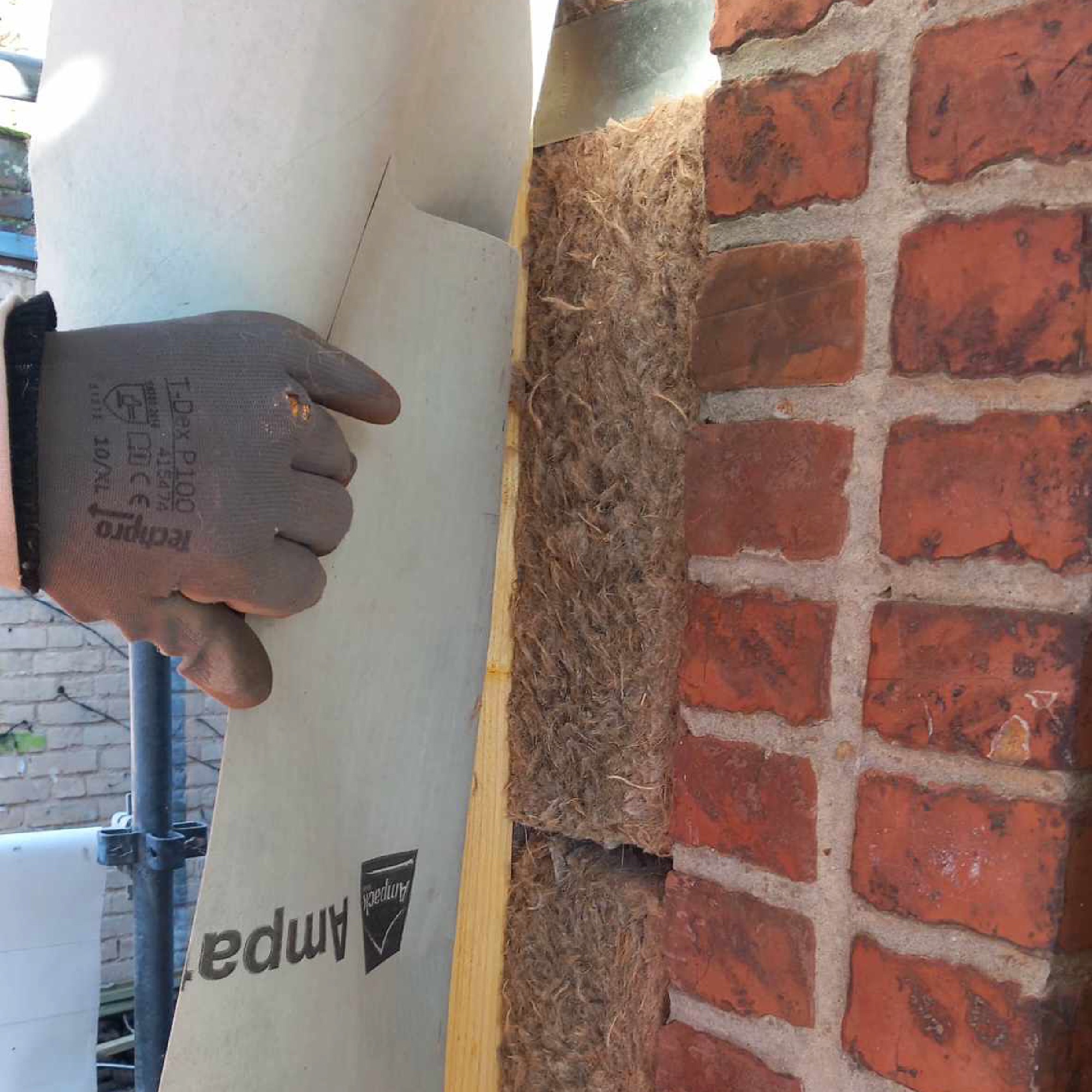
External wall insulation
Since Gramitherm® is a flexible material, it requires a different installation method compared to rigid panels.
Mounting brackets
Brackets (e.g. cladding brackets) must be securely fixed to the structural wall. Depending on the substrate, airtightness may need to be addressed beforehand.
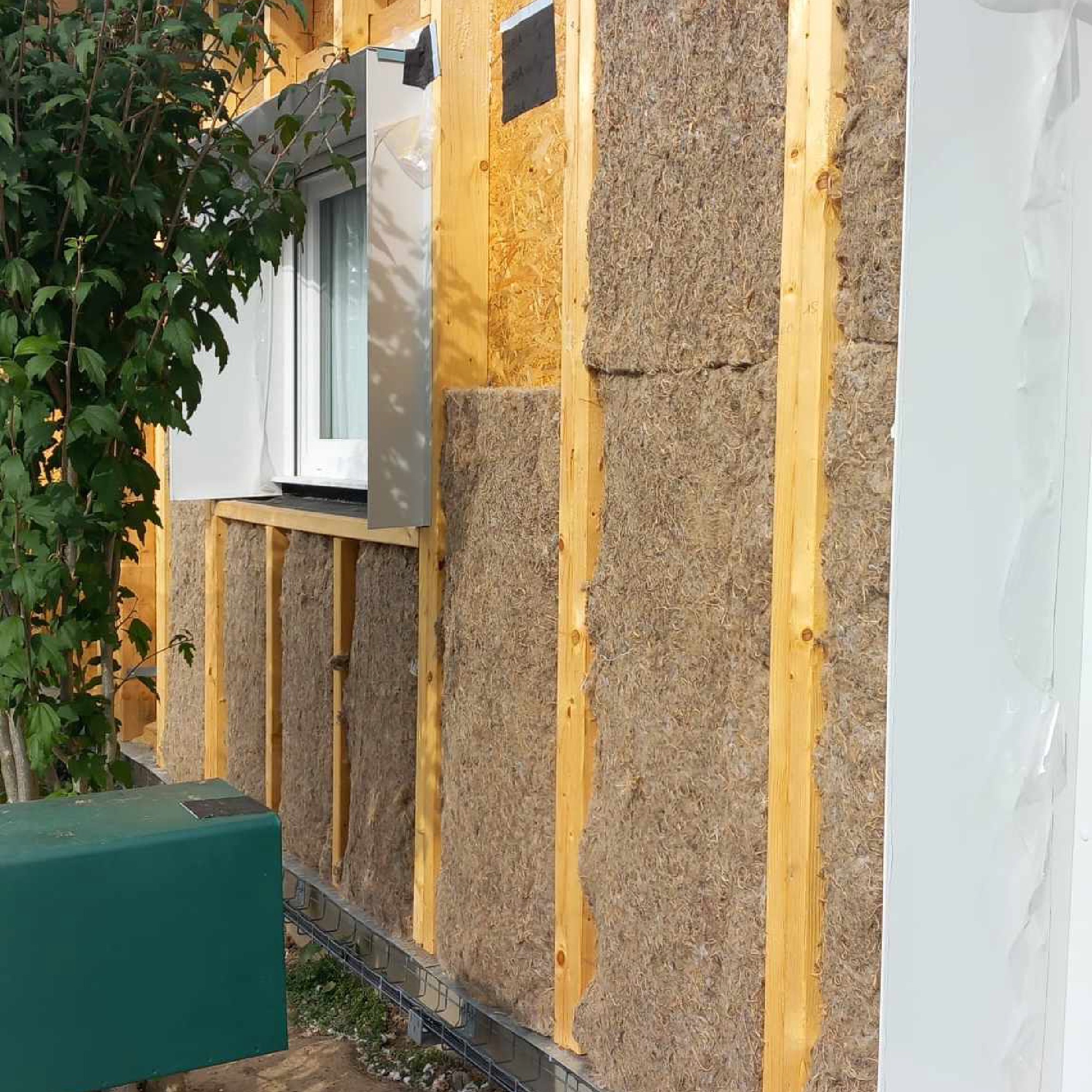
Timber studs
Timber studs are mounted onto the brackets. Gramitherm® panels are placed vertically, in contact with the wall, completely filling the space up to the outer edge of the timber frame.
Suitable wind and waterproof membrane
The rain barrier membrane must be highly vapour-permeable (HPV) and chosen according to the exterior finish. For open cladding, the membrane must also be UV-resistant.
Finishes and ventilation gap
Once the membrane is fixed to the timber frame, a vertical batten structure creates a ventilated cavity. This gap is dimensioned according to the type of finish and the height of the building.
Insulated wall base
Gramitherm® should never be in direct contact with the ground. An insulated base course must be installed at the bottom of the wall before building the secondary frame.
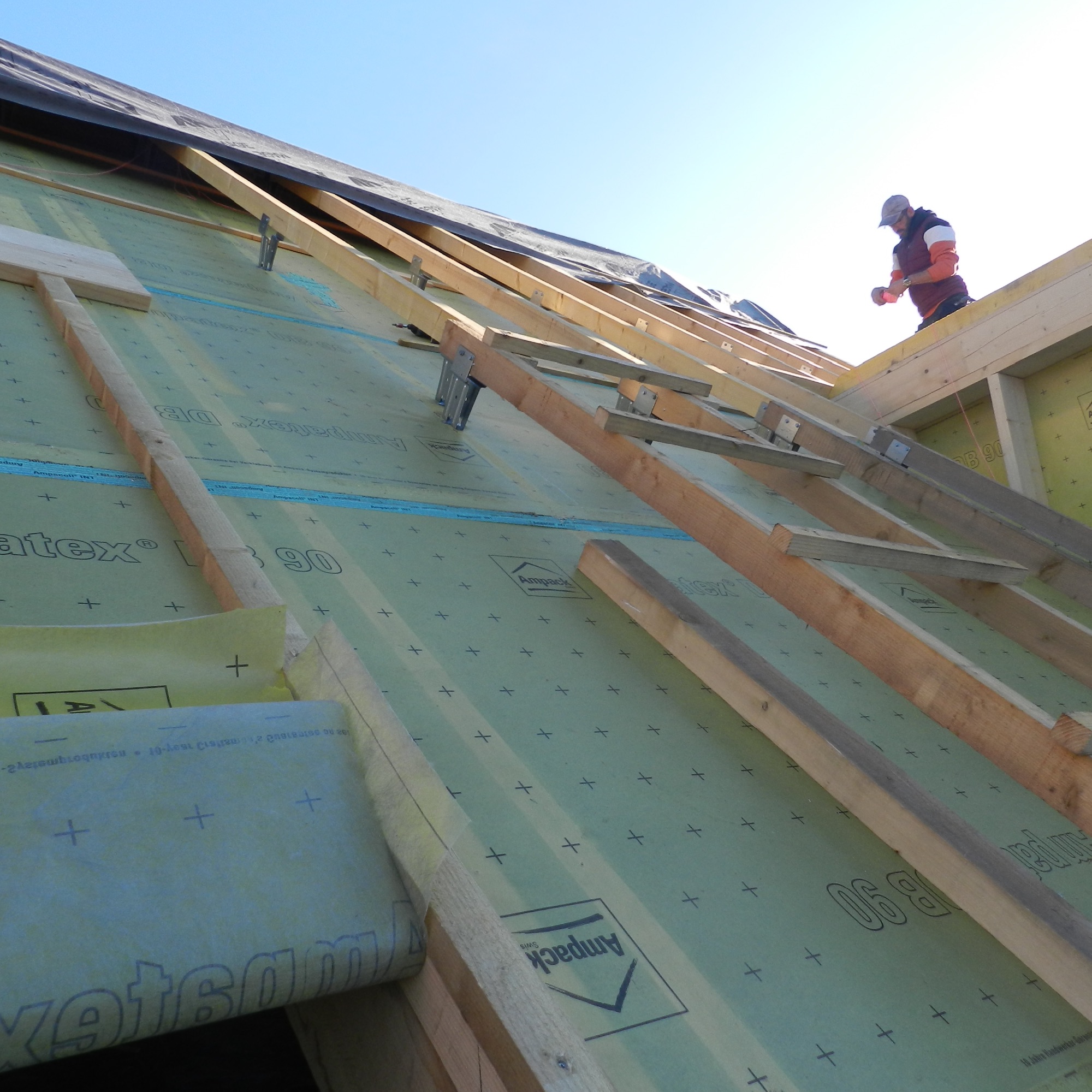
External roof insulation
Easy sarking posts
Easy sarking posts by Faynot allow for external insulation using semi-rigid materials like Gramitherm®. After removing the roof covering and battens, the posts are fixed onto the existing framework and support new timber rafters.
Installation of Gramitherm® is done continuously and compactly between these elements.
Airtightness treatment
The airtight membrane is installed from the outside, either in sections or stretched across the rafters. Airtight connections must be ensured between wall elements and singular points.
Wind and waterproof membrane
The external rain barrier must be HPV and sealed against wind and water. It’s essential to ensure all joints and roof drainage connections are watertight.
Roof finishes and ventilation gap
After placing the membrane, a counter-batten aligned with the rafters creates a ventilation gap, followed by battens to support the roof finish.
All applications must follow best practices and national building codes.
When applying external insulation, fire safety regulations must be strictly followed.
Insulation in compliance with regulations
Our product applications are carried out in accordance with best practices and comply with national standards and regulations.