

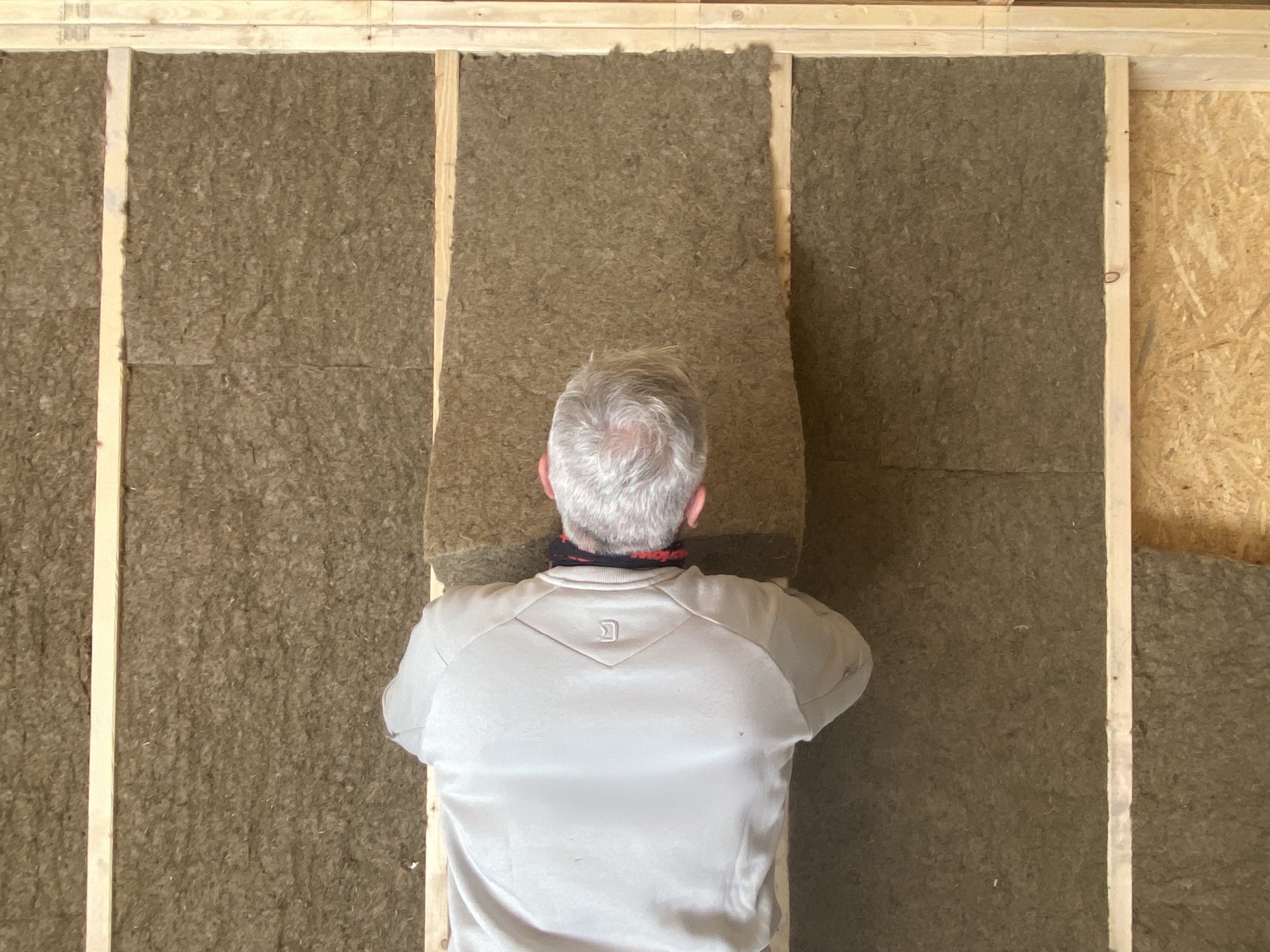
Bio-based interior wall insulation
Improve your building's thermal comfort with high-performance grass fibre insulation by Gramitherm®
If wall insulation is necessary, external insulation is generally preferable. However, due to planning regulations or property boundaries, internal wall insulation is sometimes the only viable option. A preliminary assessment of the walls to be insulated is essential.
Pre-conditions for interior wall insulation
Before insulating exterior walls from the inside, the following conditions must be met (based on Buildwise recommendations):
A sound, stable, and moisture-free wall
Moisture can originate from rising damp or leaking pipes. It is crucial to identify and address any damage and its causes before starting insulation work. The wall must also be structurally sound.
A "breathable" wall
The wall and its finish should be as vapour-permeable as possible. An internally insulated wall will become colder and more humid, and its drying time will increase. Avoid blocking its ability to dry from the outside. Beware of cemented facades, glazed bricks, tiles, mosaics, or any other vapour-tight finishes.
Exposure to moisture
A facade’s exposure to rain depends on its orientation and height. South, southwest, and west-facing walls are the most exposed to rain and wind. If the walls to be insulated are exposed, protective measures (e.g., roof overhangs, cladding, breathable water-repellent coatings) must be applied.
Elements sensitive to frost
Elements embedded in the wall that are sensitive to frost or moisture must be addressed. Interior insulation can negatively affect floors, wooden beams, water or heating pipes. These aspects must be taken into account.
If these conditions are not met, consider using another more suitable material (e.g., hemp-lime).
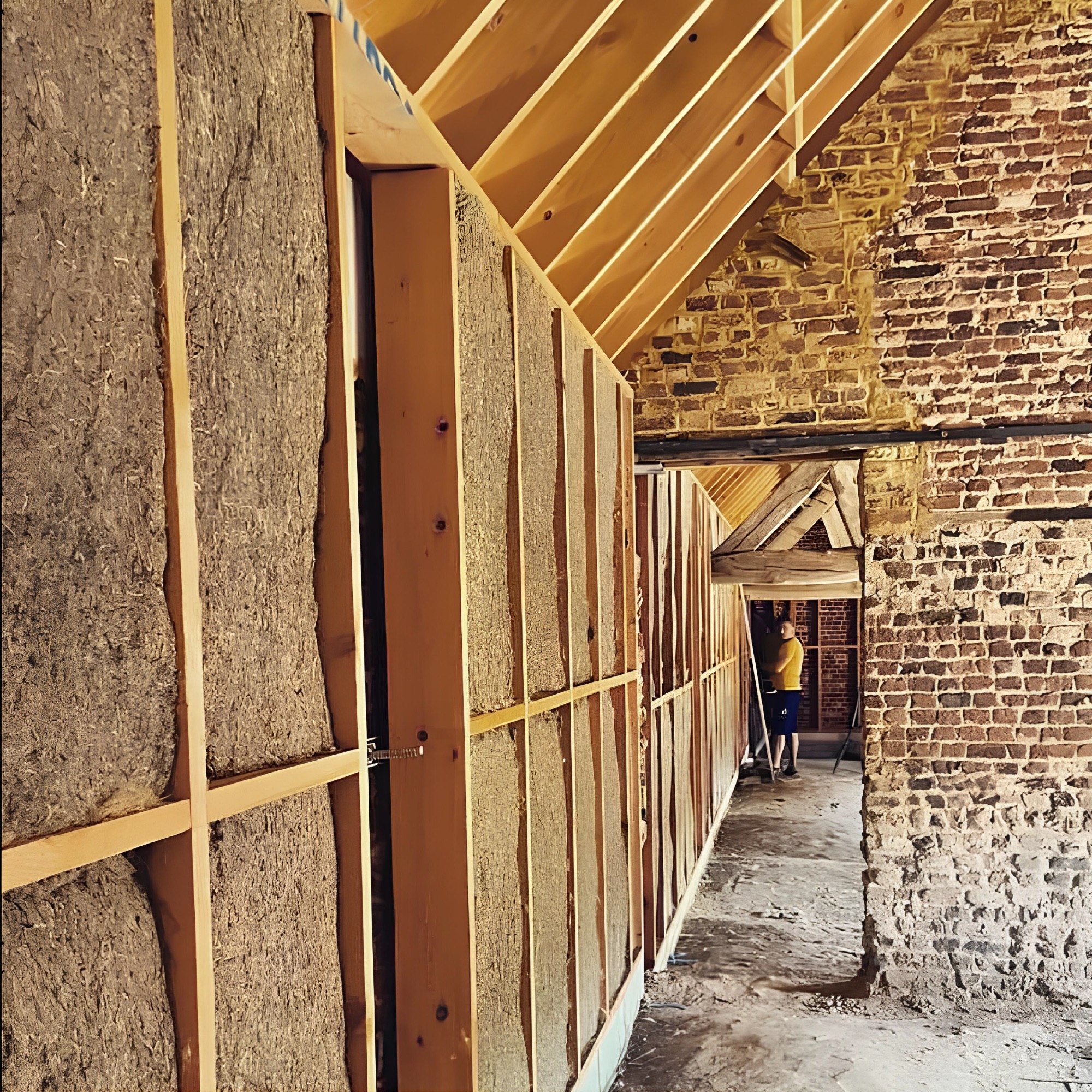
Installing interior wall insulation
On a flat wall
If the wall surface is uneven, apply a levelling render to prevent air circulation behind the insulation.
A secondary wall frame to hold the insulation
A secondary wall structure must be installed in front of the wall:
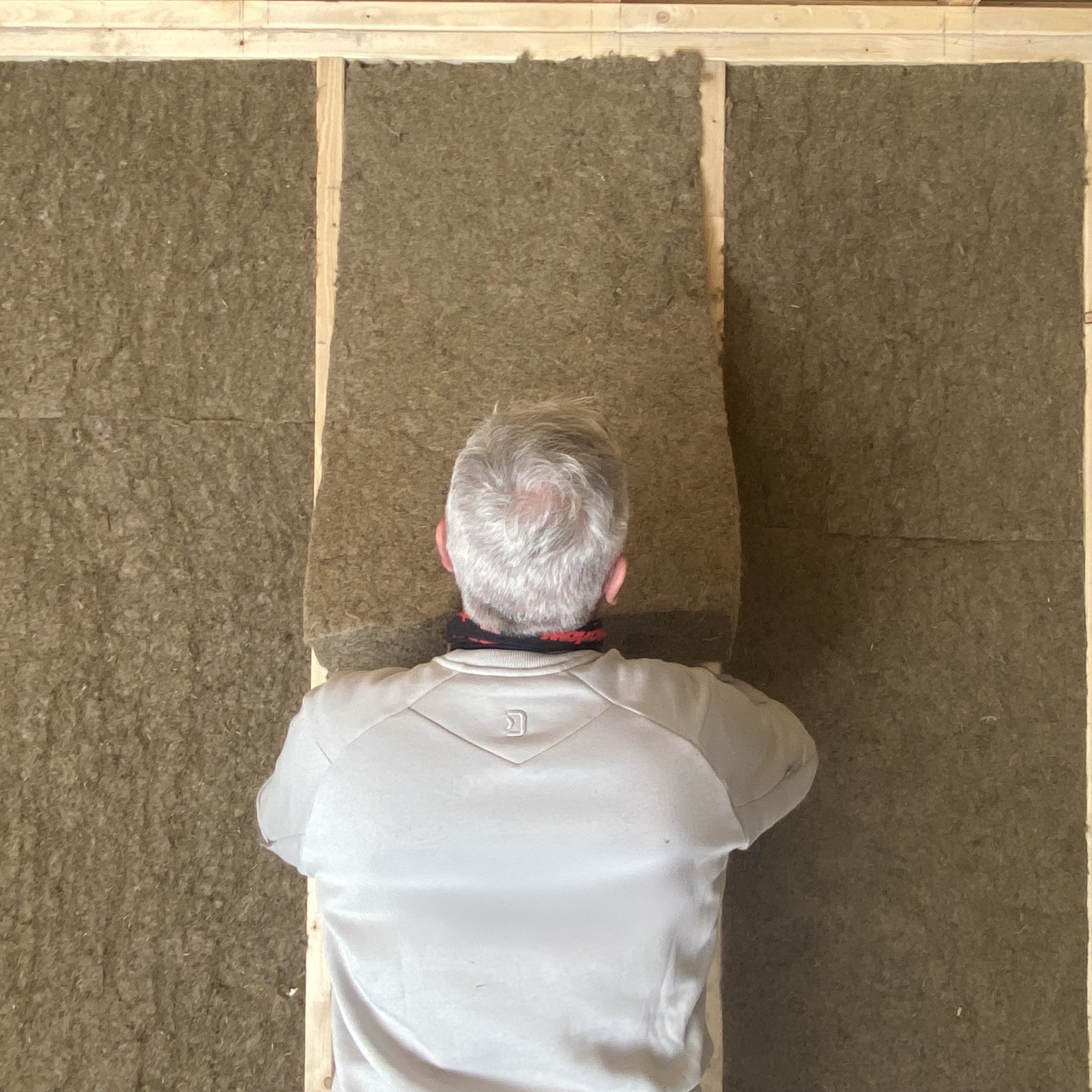
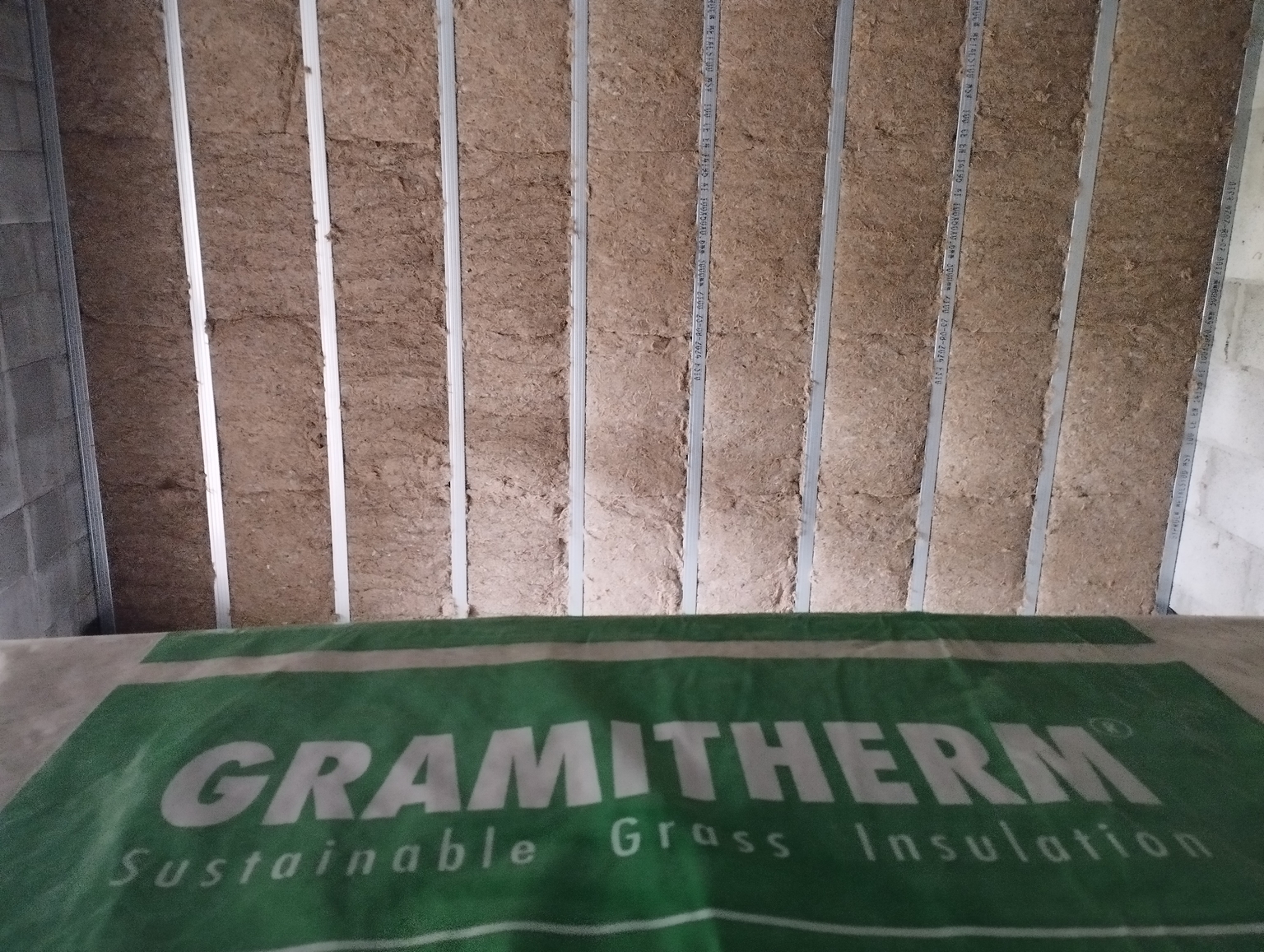
- Wooden frame: A wooden framework holds the Gramitherm® panels, placed vertically with lateral compression (2 to 3 cm), in contact with the wall and filling the entire depth. If the frame touches the wall, it must be treated (minimum class A2.1). The wooden frame also supports the airtightness membrane.
- Alternative systems: You can use Sixbox support systems. Metal frames must be offset from the wall. The panels are installed with the same care as for a wooden frame.
Thermal bridge treatment
Pay particular attention to window and door returns, and load-bearing junctions. Add insulation returns around windows and at the junctions with solid structures to minimise thermal bridging.
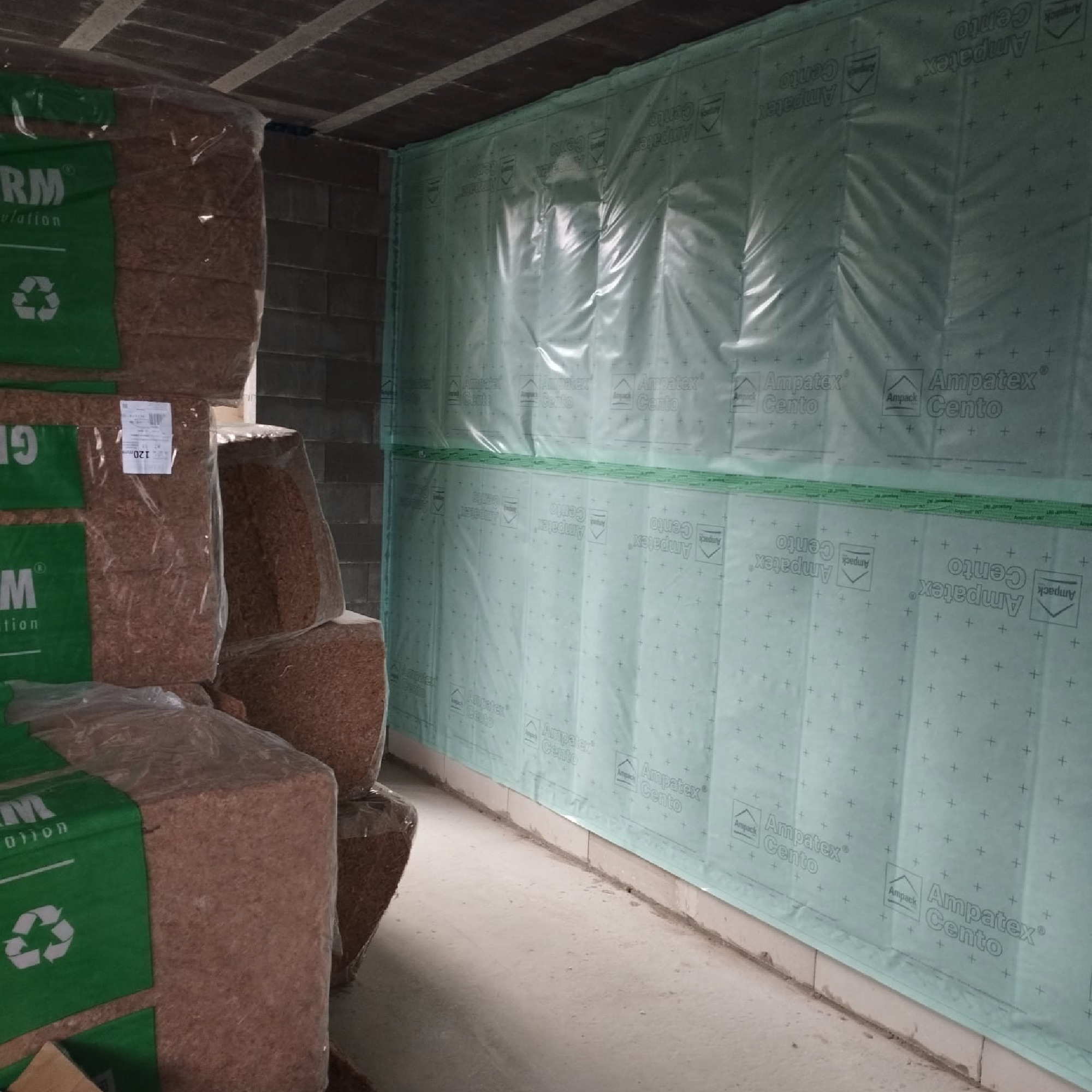
Airtightness: a critical factor
Once the insulation is installed, perfect airtightness is crucial for optimal thermal performance. Airtight membranes fulfil key functions:
- Vapour control: Regulate moisture transfer across the wall.
- Thermal protection: Prevent unwanted air infiltration.
- Insulation durability: Proper application ensures long-lasting performance.
We recommend using the Ampatex Cento membrane, provided the earlier mentioned precautions are followed.
Best practices for installing membranes
- Install independently, continuously, and airtight across the entire insulated surface.
- All joints, gaps, and connections to construction elements or between layers must be sealed hermetically.
- Special details (corners, junctions, etc.) must be treated with airtight precision.
- Any damage or perforations must be repaired immediately.
Finishes and technical installations
Once airtightness is achieved, apply the final finish with care to preserve the work done.
- Technical elements: Plan for a space between the airtight membrane and the finish layer for electric cables or other utilities.
- Finishes: These are mostly aesthetic choices. For a fully ecological approach, consider using Vesta Eco LDF panels finished with lime or clay plaster (or other options such as Fermacell, Omnex, etc.).
Insulation in compliance with regulations
Our product applications are carried out in accordance with best practices and comply with national standards and regulations.