

Europe's heatwaves: is your insulation the problem or the solution?
Heatwaves are on the rise across Europe. Discover how a bio-based insulation with high thermal phase shift keeps your home cool without air conditioning.

Summer 2026 leaves no doubt: our homes are not ready
For weeks, Europe has been gripped by heat. Belgium has just experienced its first heatwave of the year, five consecutive days above 25°C, several of which exceeded 30°C. This comes as no surprise: over the past 10 years, Belgium has recorded on average more than one heatwave per year, compared to one every four years before 1990, according to data from the Royal Meteorological Institute (RMI).
But what strikes even more than the outdoor temperatures is what happens inside. Belgian and European homes are overheating. And in many cases, the insulation itself, designed to retain heat in winter, has become a thermal prison in summer.
The paradox of modern insulation
For more than 70 years, the logic of insulation was straightforward: stop heat from escaping. European energy regulations (EPC) pushed towards increasingly airtight buildings capable of retaining as much energy as possible in winter. The result: homes that perform excellently in January but are stifling in July.
Arnaud Pierret, commercial director of Pierret Portes & Fenêtres, captures the challenge in a phrase that has resonated across the industry: "For more than 70 years, we have been trying to stop heat from getting out. I believe the next wave will be about stopping it from getting in."
This shift in paradigm is significant. According to a study by KU Leuven, one in five Belgian homes risks overheating as early as 2039. By the second half of the century, that figure could rise to nine in ten homes. Faced with this reality, the insulation industry is reinventing itself around two key concepts: breathability and thermal phase shift.
Understanding thermal phase shift: the invisible shield against heat
Thermal phase shift measures the time it takes for outside heat to travel through an insulated wall and reach the interior of a building. The longer this delay, the better the summer comfort.
In concrete terms: if your wall offers a phase shift of 9 hours, the heat from the peak of the day (around 2–3 pm) only reaches the interior of your home in the evening, precisely when outdoor temperatures begin to drop. The house no longer needs to store that heat: it can release it naturally through night-time ventilation.
This physical principle depends directly on the density and specific heat capacity of the insulation material used. The denser a material and the more heat it can absorb, the greater the phase shift. This is precisely where bio-based insulation materials, and grass fibre in particular, excel.
Bio-based insulation: designed for both seasons
Unlike glass wool (around 8 kg/m³) or polystyrene, bio-based insulation materials have much higher densities. Wood fibre, for example, reaches 50 kg/m³. This density translates directly into summer performance: the material absorbs heat slowly, stores it, and releases it gradually, without ever letting it rush into the interior of the building.
On top of this comes their hygroscopic behaviour: natural fibres absorb ambient moisture and regulate it, contributing to healthier and cooler indoor air, even in hot weather.
This dual performance, winter and summer, explains the growing enthusiasm for bio-based materials. According to players in the field, some specialist companies are recording growth of +17% in 2026 compared to the previous year.
A local, sustainable and certified solution
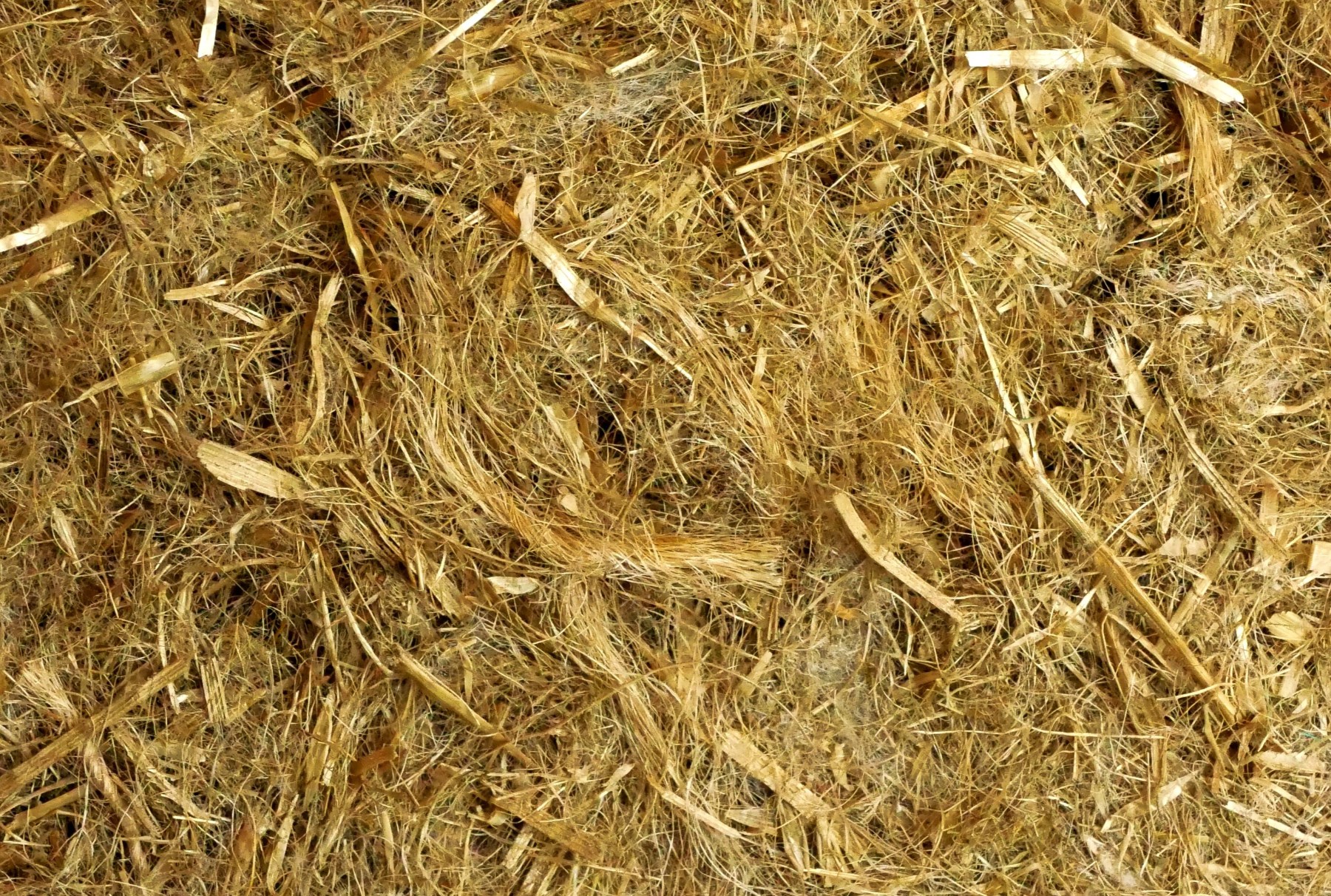
One of the least-known strengths of bio-based insulation is its local rootedness. Belgium produces several of these materials: recycled paper cellulose from Ciney, and grass fibre manufactured in Auvelais (Sambreville). These materials make use of local resources, mowing from motorway verges and airfields, recycled coffee and cocoa sacks, and drastically reduce the carbon footprint of transport.
In a context where heatwaves are directly linked to climate change, choosing a bio-based insulation material means acting on the cause of the problem while protecting yourself from its effects.
Insulation, solar protection, ventilation: a global strategy
Experts are unanimous: no single solution works alone. Bio-based insulation is an essential first line of defence, but it must be part of a broader thermal comfort strategy:
- Exterior solar protection (screens, sun blinds, shutters) on south- and west-facing façades
- Intensive night-time ventilation: open wide as soon as outdoor temperatures drop below 22–23°C
- Daytime closure: close shutters and blinds as soon as the outside is warmer than the inside
- Limiting internal heat gains: avoid energy-intensive appliances during the hottest hours
And above all: think about the building envelope as a whole. A perfectly insulated wall is useless if three south-facing roof windows let in all the solar heat.
Conclusion: anticipate, don't just endure
The heatwave that has just struck Europe is not an isolated climate event. This is the new face of our summers. The homes that will be comfortable in 20 years are those being designed and renovated today with this reality in mind.
Insulation is no longer just a winter concern. It is the thermal shield for both seasons.
Want to learn more about the summer performance of bio-based insulation?
👉 Download our technical documentation — technical data sheets, DoP and environmental declarations available free of charge.
About Gramitherm
Explore Gramitherm®: discover our company, our insulation solutions, our dedicated services, and get in touch easily.