

Thermal phase shift: why grass fibre keeps your home cool this summer
2232 J/kg.K heat capacity, 9h phase shift: discover why Gramitherm® grass fibre insulation protects your home against summer heatwaves.

9 hours. That is how long it takes heat to travel through 240 mm of Gramitherm®.
In the middle of a heatwave, that figure makes all the difference. While the outdoor thermometer peaks at 35°C in the early afternoon, the interior of your home, protected by a wall insulated with grass fibre, only feels that heat in the evening, at the precise moment when temperatures start to fall.
That is thermal phase shift. And that is the core of Gramitherm®'s summer performance.
What exactly is thermal phase shift?
Thermal phase shift measures the delay between the moment heat strikes the outer surface of a wall and the moment it reaches the inner surface. The longer that delay, the cooler your home stays throughout the day.
This phenomenon depends on two fundamental physical parameters:
Specific heat capacity: the amount of energy a material can absorb before allowing heat to pass through. The higher this value, the better the material is at "storing" heat and delaying its transmission.
Density: a dense material has more mass to "charge" thermally before transferring heat inward. This is why heavy, dense materials, such as grass fibre, offer far better summer performance than lightweight insulation such as glass wool.
Gramitherm® by the numbers: what the technical data sheet says
Gramitherm®'s performance is certified and measured in accordance with applicable European standards (ETA-21/0260, EN 12667:2001). Here are the key figures for summer comfort:
- Thermal phase shift (240 mm, opaque surface) : 9 hours (Technical data sheet DOC-SMQ-010)
- Specific heat capacity : 2232 J/kg.K (CODEM report RE0624AC-002)
- Thermal conductivity : λD=0.040 W/mK (EN 12667:2001)
- Bio-based mass: 86% (EN 16785-2:2018)
- Density40 kg/m³ (±5) (EN 1602)
For comparison, standard glass wool has a specific heat capacity of approximately 800 to 1000 J/kg.K, more than twice lower than grass fibre. This difference translates directly into a much shorter phase shift, and therefore a home that heats up far more rapidly in summer.
How phase shift works in practice
A concrete example on a heatwave day:
- 2:00 pm — The outdoor temperature reaches 36°C. Heat begins to act on your home's façade.
- 11:00 pm — With a 9-hour phase shift, that heat only now reaches the inner surface of the wall.
- But at 11:00 pm, the outdoor temperature has already dropped to 20–22°C. By opening windows (night-time ventilation), you evacuate the heat stored in the wall before it enters the living space.
Result: the home stays cool the following day. Without air conditioning.
This virtuous cycle, absorbing heat by day, releasing and evacuating it at night, is made possible by the high specific heat capacity of grass fibre. It is the same logic as old stone houses: they stayed cool in summer thanks to their natural thermal inertia. Gramitherm® reproduces that principle with a modern, bio-based material that is easy to install and CE-marked.
Breathability: the underrated summer asset
Beyond phase shift, grass fibre exhibits remarkable hygroscopic behaviour: it absorbs ambient moisture when the air is warm and humid, and gradually releases it as conditions change.
With a water vapour diffusion resistance coefficient of µ = 2 (measured in accordance with NF EN 12086:2013), Gramitherm® is a "breathing" insulation that regulates indoor humidity. In summer, this translates into healthier, less heavy, more comfortable indoor air, without the "wet oven" effect felt in some highly airtight buildings.
A certified solution for walls, roofs and lofts
Gramitherm® panels are approved for a wide range of applications (ETA-21/0260), all relevant to summer heat protection:
- Roofs and lofts (between rafters, above/below rafters, flat and sloped lofts), the roof is usually where heat enters most massively
- Walls (timber-frame construction, internal insulation of external walls, partition walls)
- Ground floors
Available thicknesses range from 45 to 220 mm, with declared R-values from 1.13 to 5.50 m².K/W depending on the chosen thickness. For maximum phase shift, thicknesses of 160 mm and above are recommended for roof applications.
Bio-based, local, durable: ecological consistency
Choosing Gramitherm® also means choosing insulation that is consistent with the climate challenges making heat protection necessary in the first place.
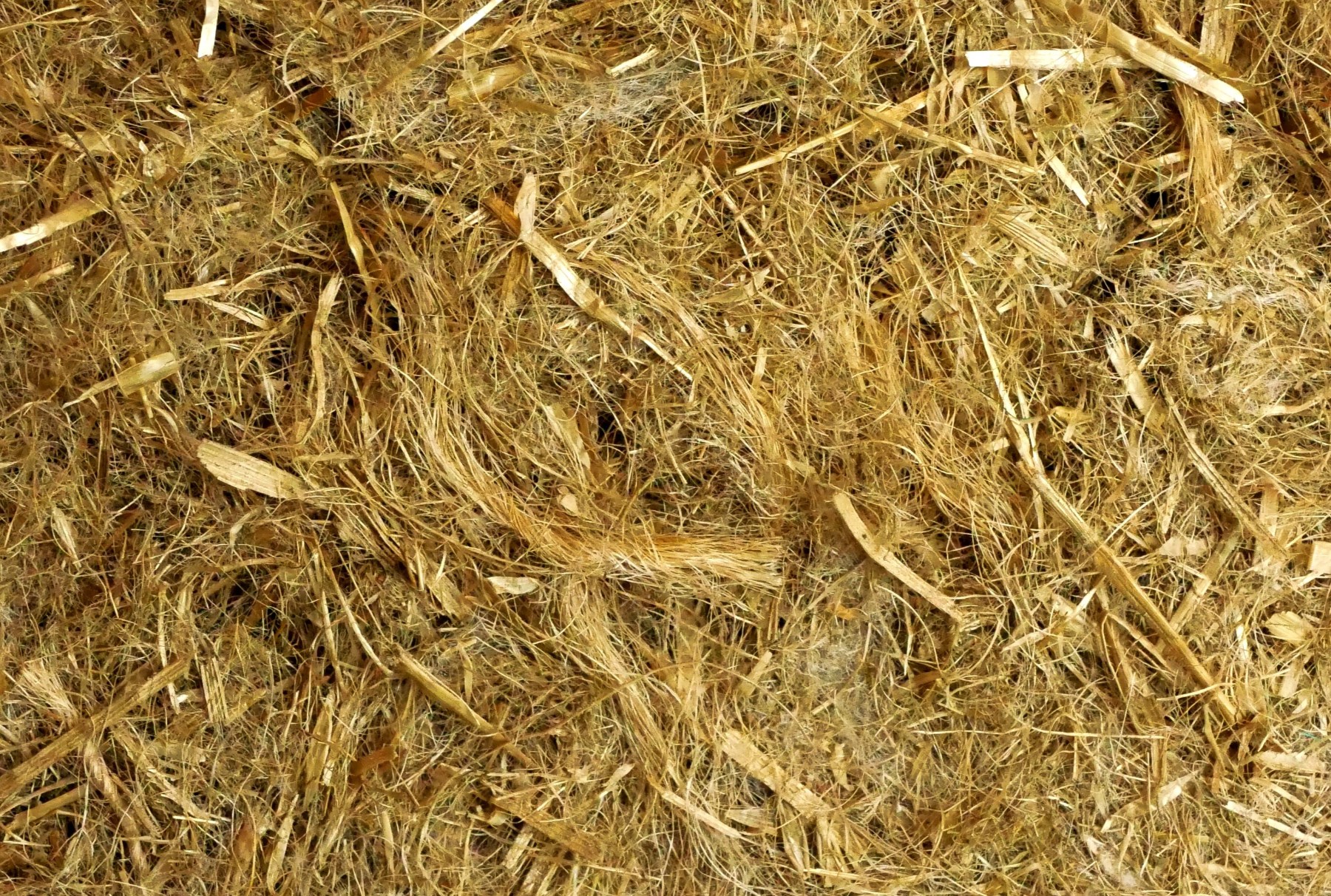
The panel is composed of 86% bio-based materials (naturally mown grass fibre + recycled jute from coffee and cocoa sacks), sourced within a 300 km radius of the factory in Auvelais (Belgium). It holds the Walloon Bio-based Product Label (certificate N°BE/14/03/20/88-BE), the Solar Impulse Efficient Solution label (August 2022), and a useful service life of at least 50 years according to ETA methods.
The FDES and B-EPD are available on gramitherm.eu and on the INIES/AFNOR and TOTEM databases.
Indoor air quality: no compromise
Gramitherm® achieves the VOC A+ classification (EN ISO 16000-9), the highest level of indoor air quality. TVOC measured after 28 days stands at just 17 µg/m³, against an A+ threshold of 1,000 µg/m³. No pollen (the raw material is cut before flowering), no fungal spores, no skin irritation during installation.
In summer, when ventilation is reduced, indoor air quality becomes even more critical. Gramitherm® adds no chemical load to the air in your home.
What you can do right now
If you are planning a renovation or new build, here are the recommended steps to integrate thermal phase shift into your project:
- Prioritise the roof, this is where heat enters most massively in summer. Aim for a phase shift of at least 8 to 10 hours.
- Choose an appropriate thickness, from 160–180 mm for optimal summer performance in roof applications.
- Combine with exterior solar protection, screens, shutters, sun blinds on south- and west-facing façades.
- Plan night-time ventilation, the insulation does its job during the day; evacuation happens at night.
Download the complete Gramitherm® technical data sheet Certified data, R/U tables by thickness, hygroscopic behaviour, certifications and approvals.
👉 Access the technical documentation
👉 Order your Gramitherm® panels on GramiShop
Sources: Gramitherm® technical data sheet DOC-SMQ-010 v.05/26 — ETA-21/0260 (DIBt) — CODEM report RE0624AC-002 — KU Leuven study on overheating of Belgian homes — RMI data on heatwaves in Belgium — Trends-Tendances, June 2026
About Gramitherm
Explore Gramitherm®: discover our company, our insulation solutions, our dedicated services, and get in touch easily.